

The Drive to East Machias
As we drove along the Maine coastline, passing all the quaint coastal towns with their Victorian homes and buildings, most of which were painted white, my excitement grew. Although I prefer more color in my communities, I imagined that we would be living in one of these little towns, perhaps a fishing village. During the interview, we were told that the school was near the ocean. However, there was a hint of reality, something we didn’t focus on or consider enough—the mention of a food desert. I think I had convinced myself that this bit of information meant that the school was not in a large town; maybe it was a village, similar to the villages we had passed on the way. It’s funny the things we tell ourselves. A food desert does not mean a quaint Victorian fishing village popular with tourists. It means scarcity.
At some point, a few miles past Rockland, we began to turn inland, away from the coastline and the old Colonial and Victorian houses. The road wound deeper into the woods, with birch trees lining the lone highway. Houses became few and far between, and after driving for another hour, we passed through the small town of Ellsworth. Despite its size, Ellsworth seemed to have all the essentials for a thriving community, yet it wasn’t our destination, so we kept driving.
As we meandered through the landscape, lakes shimmered beside us, reflecting the dappled sunlight. Each lake emerged like a glistening mirror, signaling coded messages through the trees. The subdued sunlight from the late-day sun cast shadows over the winding roads as we turned through sharp curves following many lakeside shorelines. What neither of us realized on our journey up Highway 1 was that we weren’t passing just lakes but inlets, estuaries, and coastal lagoons. DownEast Maine, where we were to settle for a year, is a series of glacial peninsulas stretching out like fingers reaching into the Atlantic. Occasionally, we would pass a lonely silent house, a solitary gas station reminiscent of an Edward Hopper painting, a tucked-away township with a church, and then, like a recurring motif, we would slip back into the woods, the warm fragrant pine filling the car with its scent. The rhythm of the journey slowly became predictable; after each glimpse of civilization, we’d dip back into the solitude of the woods, the quiet embrace of nature, and the hum of the car’s engine. My fantasies of a quaint seaside town with artisan shops and a tight-knit community began to fade, and I realized that I had dreamt of moving into a TV show, something like Schitt’s Creek. I had been daydreaming of a sitcom and not reality. However, reality was coming into clear view.
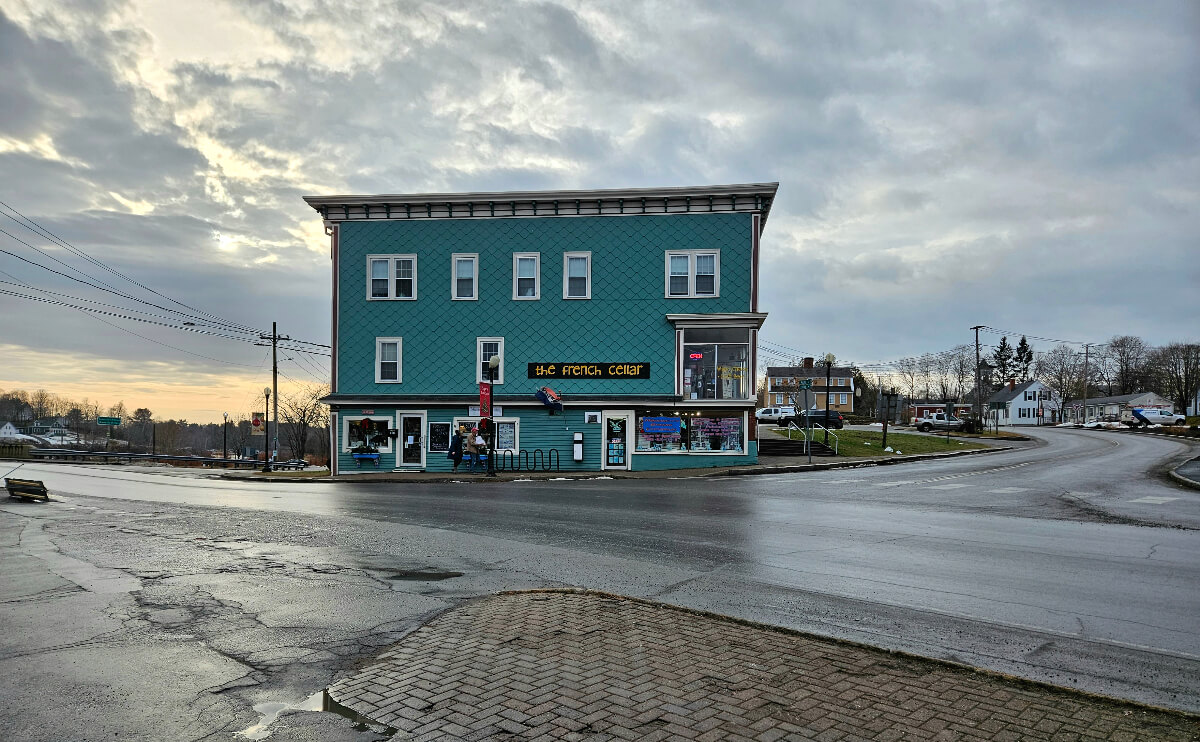
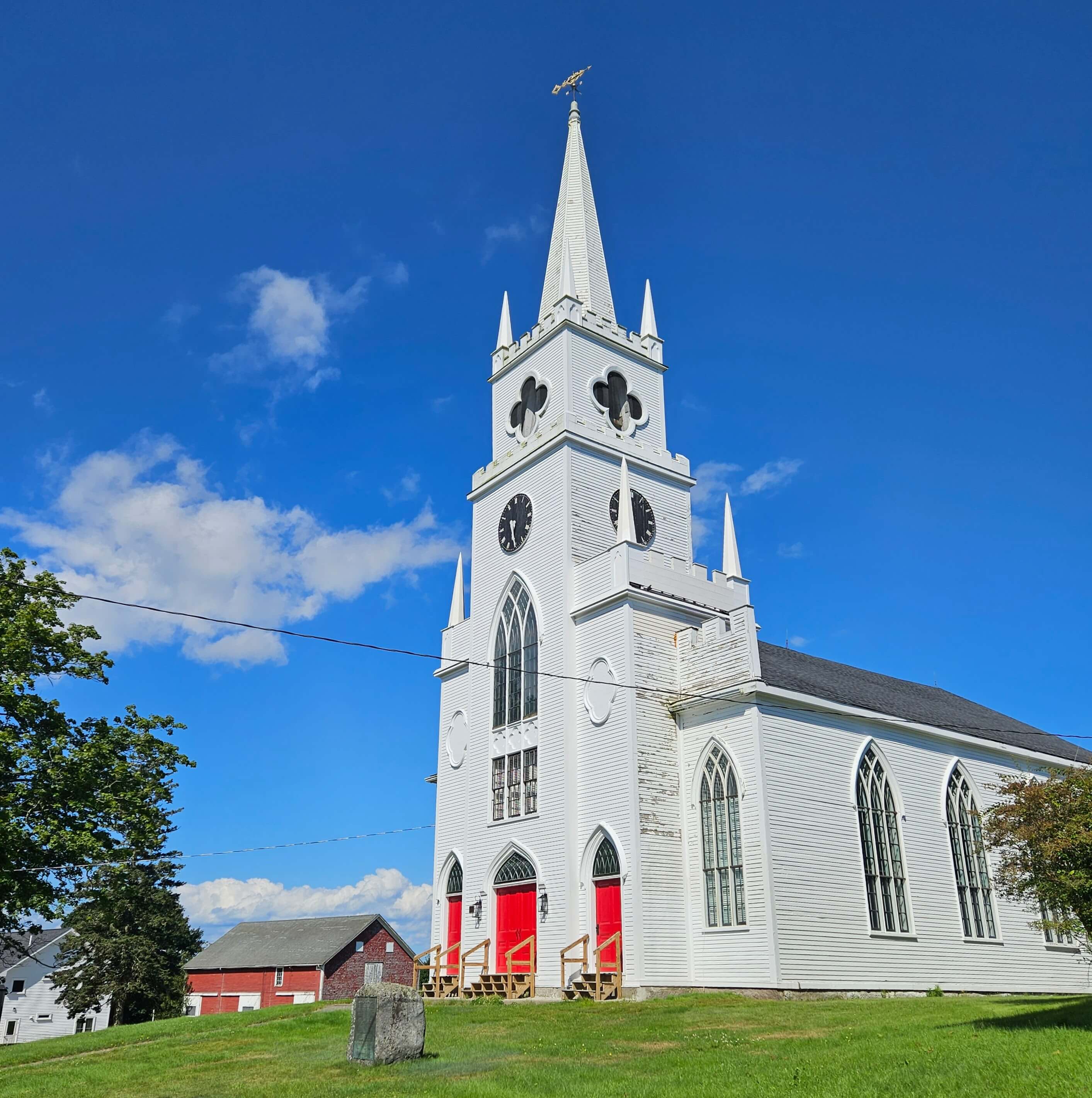
Upon entering Machias, we passed a weathered trailer park—a stark contrast to the captivating coastal imaginings—and I began to worry, not about safety, but about the economy. Was there enough affordable housing? What about jobs? Continuing our journey, sights unfolded before us: first a Dollar Store, followed by a Walgreens, a local grocery store, and the familiar golden arches of McDonald’s. Next, we passed a Family Dollar and other unassuming buildings nestled in a small parking center behind McDonald’s. As we continued over a hill, a dilapidated gun store with a large Trump 2024 flag came into view, followed by Machias University—a small beacon of education on a hill. However, Machias did not have the feel of a university town. Where were the restaurants, the cafes, the movie theater? We crossed a short concrete bridge built over a wide river with small falls, and then we drove through a downtown that was barely half a block, with two very cute buildings—one painted canary yellow and the other parrot green. To our left was a Federal-style bank, a church with a Gothic Revival steeple, and two gas stations. The hills to our right fanned out into the distance as the wide foamy river moved alongside us. To the left, we passed a Dunkin’ Donuts and a pizza place before slipping back into a sparse silence of space. Again, a house here, a small building there, until we were back into the woods with nothing but trees and warning signs about deer crossings. We drove on for another 30 minutes, the river remaining to our right and woods to our left, until we finally made it to the tiny town of East Machias. Not much of a town, really. It had some houses, a church with a graveyard behind it, a town hall, a post office, and a Salmon Federation Building. Some old colonial and craftsman houses lined the street where we were about to live, next to the school where Eun was to work.

When captured in a photograph, parts of the town appear charming, especially along the East Machias River that runs through the center. In late summer, when we first arrived, eagles and hawks soared low in the sky or perched atop Eastern White Pine trees. If life were a photograph, East Machias would be a picturesque village along a rapid river with wildlife, fresh air, and a private academy built in 1792 featuring Greek Revival and Victorian buildings (plus a modern-looking high school). However, a photo is just an image, and what isn’t captured is the high unemployment and lack of opportunities.
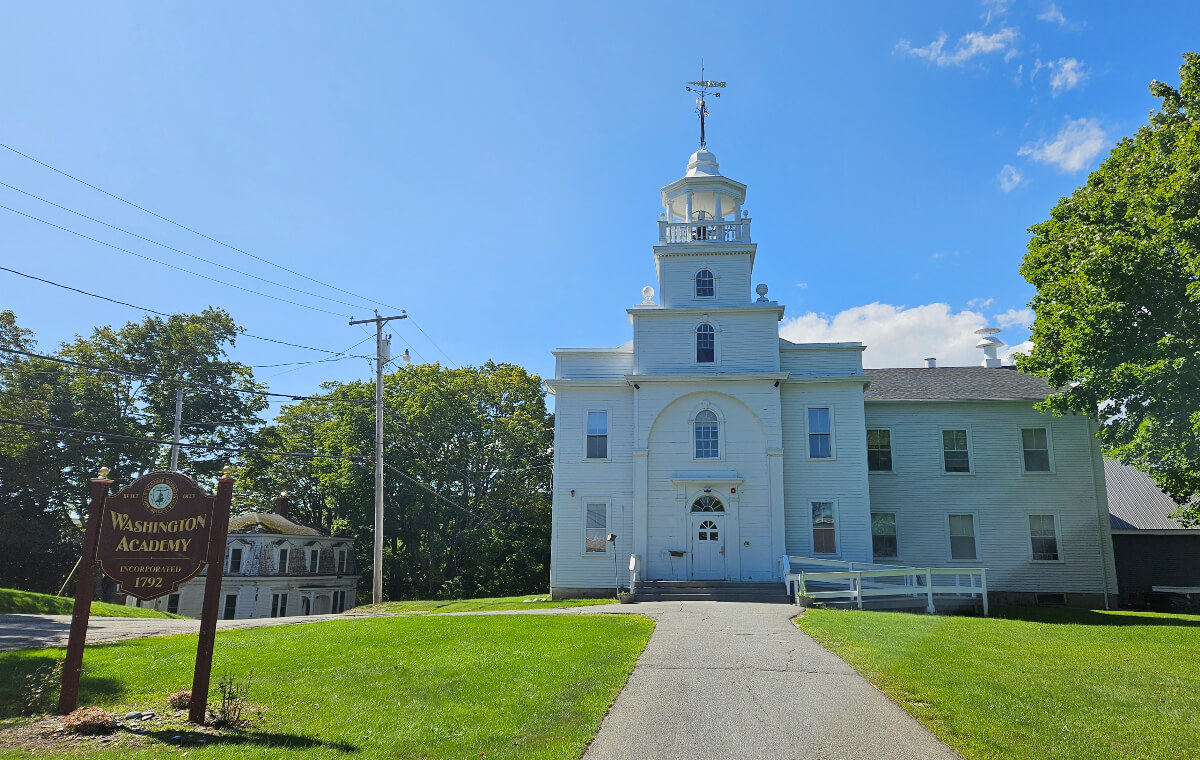
As we settled into East Machias, statistics revealed a stark reality. This tiny town of 1,364 people is nestled in Washington County which ranks as the poorest county in Maine. The unemployment rate of 4.6% is a shocking contrast to the 3.2% statewide average, casting shadows on our newfound surroundings. It adds an undercurrent of economic challenges that we did not foresee. There aren’t many services, and, as one woman told me, ‘people move out here to get away from everything, but what they find out is that they have moved away from everything.’ It can be challenging in the case of a disaster like a severe storm. ‘Help comes late,’ as another local told me, ‘it’s as if they forget about us out here.’ The main industry is education; the second is health, and the third is public service. The top job is the school where Eun works, and this private academy employs and educates students from many surrounding townships. For a person, like myself, trying to get out of the education sector, especially the for-profit education sector, I did not come to the right place. However, Eun has found some opportunity, and in fact, it is the opportunity for him to teach and coach basketball that brought us here. I, on the other hand, am one of the 4.6%. Although, not in a census. As far as returning to America and starting over, we may have chosen one of the worst spots for dual opportunity and growth. I see no American dream here, but then again, does that exist anywhere in the U.S.? It isn’t what we had expected or hoped for, but for now, we have a modest roof over our heads, food in our bellies, and a backdrop of uncertainty. We thought our road was paved, but it seems that we turned down a dirt road filled with obstructions. At least one of us is employed. Eun’s dedication and resilience contribute to maintaining our stability as we drive this rough road of financial bumps.
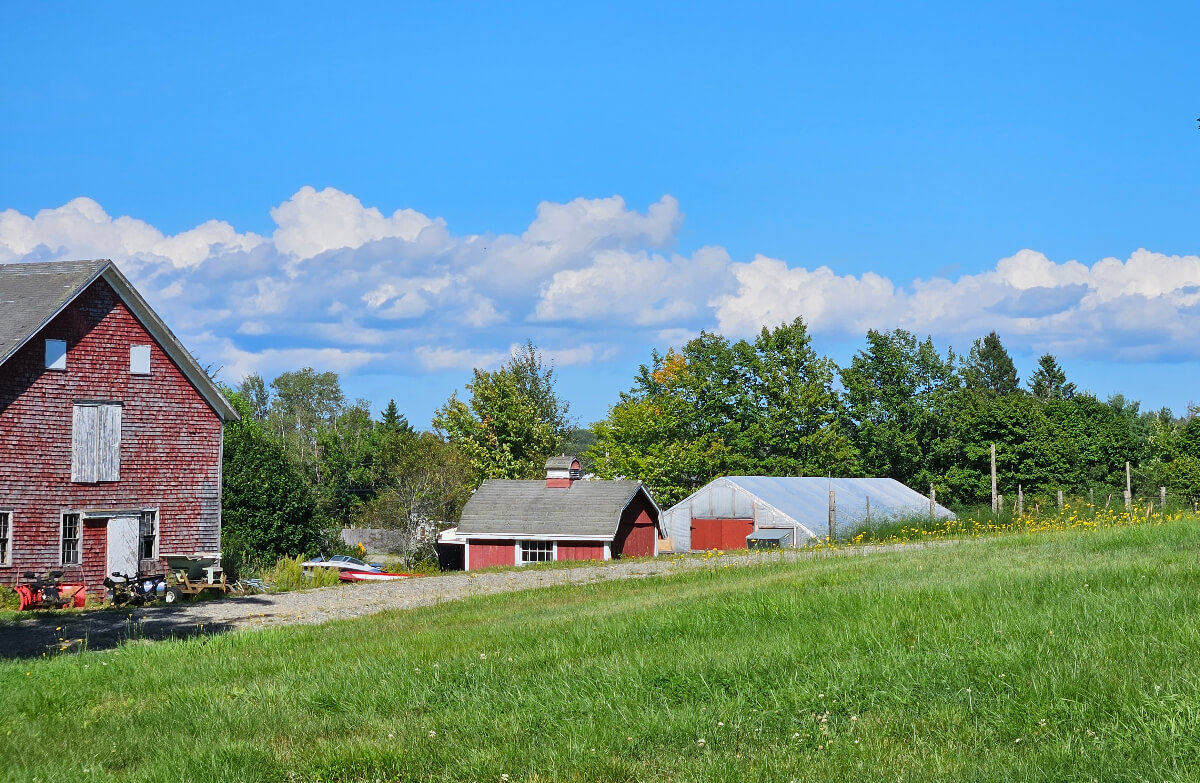
Returning to America after seven years has shown me that it is unexpectedly challenging to live here. In South Korea, the language barrier confined me to private education, and I sought to change this by returning to the U.S. Yet, in the U.S., the cost of living, along with lower benefits, and the exorbitantly high cost of health insurance, quietly undermined our expectations. It was foolish for us to think we would adapt with ease, even though we had considered the U.S. home. Still, I must have gratitude for the things I have in the present. It may be a mantra for the present, a protective shield masking an underlying fear of becoming trapped in ever-present poverty, but gratitude is necessary. We have housing, food, and internet, and for me, time has become a space for digital skill development—a journey into writing improvement, SEO, and content strategy growth. I find my own resilience and a renewed sense of purpose. This time will not be wasted.

There is a trail below the school, the Sunrise Coast Trail, that traces the river’s edge. This trail serves as our retreat; nature unfolds its tapestry of birds and trees, with inspiring views of the tiny town of East Machias. The river flows into Machias Bay that opens into the Gulf of Maine, where the Battle of Machias, the first naval battle of the Revolutionary War, took place. Yet, even before 1777, the Passamaquoddy people fished along this river, maybe paddling birch canoes in the neighboring lakes or bay. We are surrounded by natural habitat and history. Habitat that we can see and a history hidden in the motions of the present. While we take walks along this trail, we can see eagles, hawks, ducks, and plump little chickadees. The river and the pines frame East Machias like a photograph; a scenic bridge, the square white Albee—Richardson Hall with its small bell tower, and the Gothic revival steeple from the church rising above the pine and birch. It is lovely to look at, like a postcard sent from a friend. It is a reminder of the beauty that graces us.

Every little bit helps
Choose an amount
Or enter a custom amount
Your contribution is greatly appreciated.
Donate An Accidental Vagabond