
Where is Suwon?
Suwon is south of Seoul, South Korea. It is about 45 minutes to an hour away depending on your choice of travel. It is the capitol city of Gyeonggi-do (경기도) or Gyeonggi province. 도 (pronounced Doh) in this context means province. South Korea has 8 provinces, 6 metropolitan cities that act as their own entities, a self-governing province which is an island-Jeju-do (here 도 means both province and island) and special cities like Seoul and Sejong. Sejong is a special autonomous city in South Korea which I don’t really understand, but its meant to be a second capital, or something like that. I never had the chance to travel there while I had lived in South Korea.
It took me about 4 years to figure out that Seoul is surrounded by Gyeonggi-do. This is because I used to live in Suwon, which is south of Seoul. I assumed Seoul was north of Gyeonggi province. Then while living in Seoul we took a trip to see the 5 Royal Tombs in Goyang in Gyeonggi-do which is north of Seoul. Suwon is south of Seoul and Goyang is north, yet both Suwon and Goyang are in Gyeonggi-do. It was very confusing until I finally just looked at a map. Basically, if Seoul and Inchon weren’t considered special cities they’d be a part of Gyeonggi-do.
Suwon City not Hwaseong City
When I lived in Gwanggyo, a city within Suwon, within Gyeonggi-do, it took about 40 minutes to reach Gangnam via the subway. During the weekends, I would often travel to Seoul to explore, so it wasn’t until a year after we moved to Seoul that we finally made it to the Suwon Fortress also called Hwaseong Fortress (Brilliant Fortress), also called Suwon Hwaseong Fortress. Why so many names? It could be because there is a city in Gyeonggi-do that is right next to Suwon named Hwaseong, and both cities which used to be farmland have grown so much over the years, and where the fortress was originally built has gone through name changes. It’s confusing, but to clarify, Hwaseong Fortress is in Suwon city not Hwaseong city.
The Korean Hanok
Our first stop was to look at a Hanok building at the Suwon Technology Exhibition hall and the Suwon Center for Traditional Culture. Eun had been taking some carpentry classes, and was interested in learning about the design and architecture behind these traditional Korean homes. So we decided to spend a little time learning about hanoks before exploring the fortress.
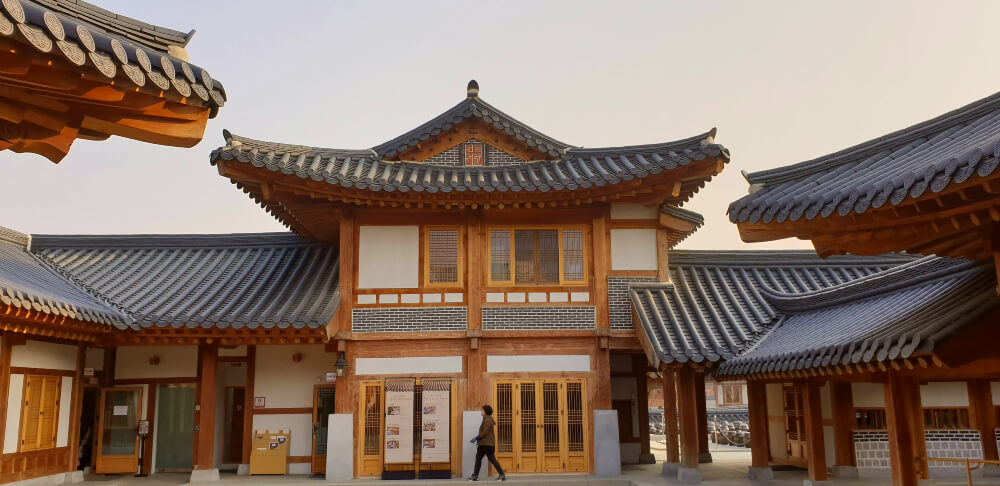
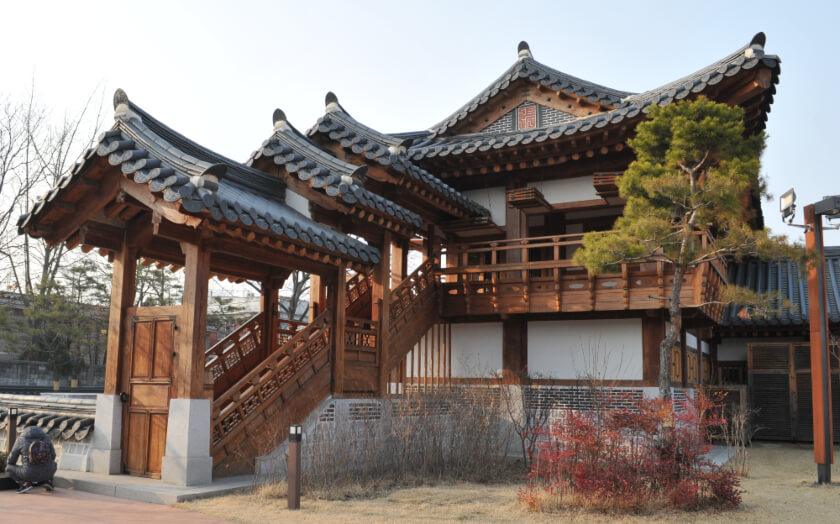

According to information given at Suwon Technology Exhibition hall hanoks were first designed during the Joseon Dynasty in the 14th century. The home or building is designed with the elements and the seasons in mind. This kind of planning is called baesanimsu. It brings to mind Feng Shui which would make sense given China’s influence over ancient Korea. Similar to Feng Shui, it is about the perfect harmony between the elements. It’s all about building the good energy. The houses were (and are as the tradition is still alive) different depending on in what part of Korea they were built. In the south, the layout of a house is different from ones in the north. The north is colder, so the design is square with a courtyard in the middle in order to keep the heat in (You can see an example of this style in my post from visiting a tea house in the Hanok village in Bukchon,) whereas if you travel to the south where it is warmer, the design is created to allow more airflow, so they are open and often L shaped. The most ideal elemental design is to have a mountain in the back and a river in the front, which is really close to my dream home of a mountain in the back and an ocean in the front; Pacific Northwest style. The hanok that we visited, before exploring the fortress, was a modern hanok built as a museum to educate people on the history and craftsmanship of these homes.

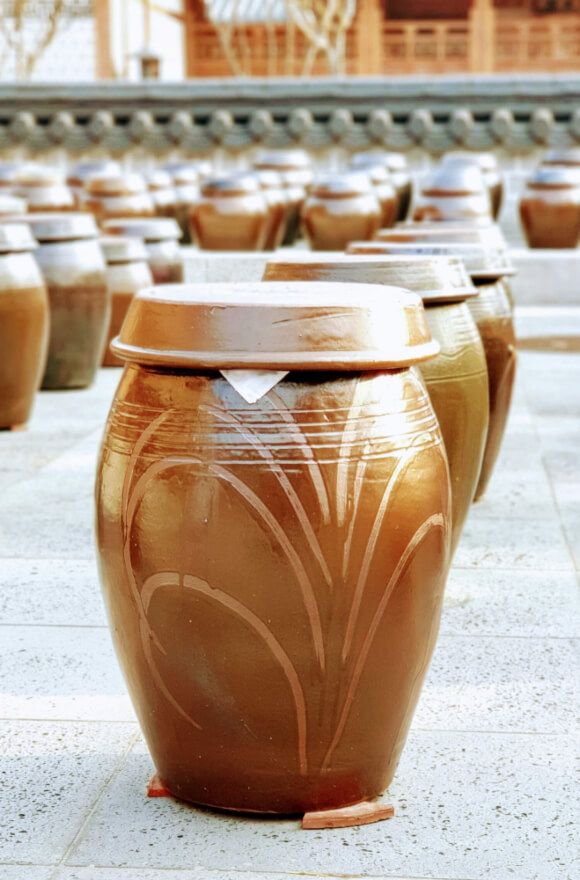

We wandered around this hanok, picking up literature on the history, and took photos of the onggi pots, where kimchee is traditionally fermented, then afterwards we walked toward the wall of the fortress.
A Fortress of Military Might and Memorial
It was meant to be the new capital when the fortress was built over 200 years ago. Long before Seoul was officially called Seoul it was Hanyang or Hanseong. King Jeongjo the 22nd king of the Joseon dynasty wanted to move the capital from Hanyang to Suwon. The reason being that the proximity to the Yellow Sea and China was better for commerce, and the King believed he could make changes to better the Dynasty, and moving to Suwon was a step in this direction of his reforms.
The Hwaseong Fortress was not only the beginning of a new capital, but it was a military complex and a burial place for his father Prince Sado. It was built between 1794 and 1796 (when John Adams became the 2nd U.S. president) by King Jeongjo of the Joseon Dynasty to remember his father who was executed by his grandfather, King Yeongjo. If you’re interested in more information on the history of this execution by rice, you can search Prince Sado and begin the descent into the rabbit hole of Joseon history. There are also many Korean dramas that tell the story like The Throne and The Secret Door.
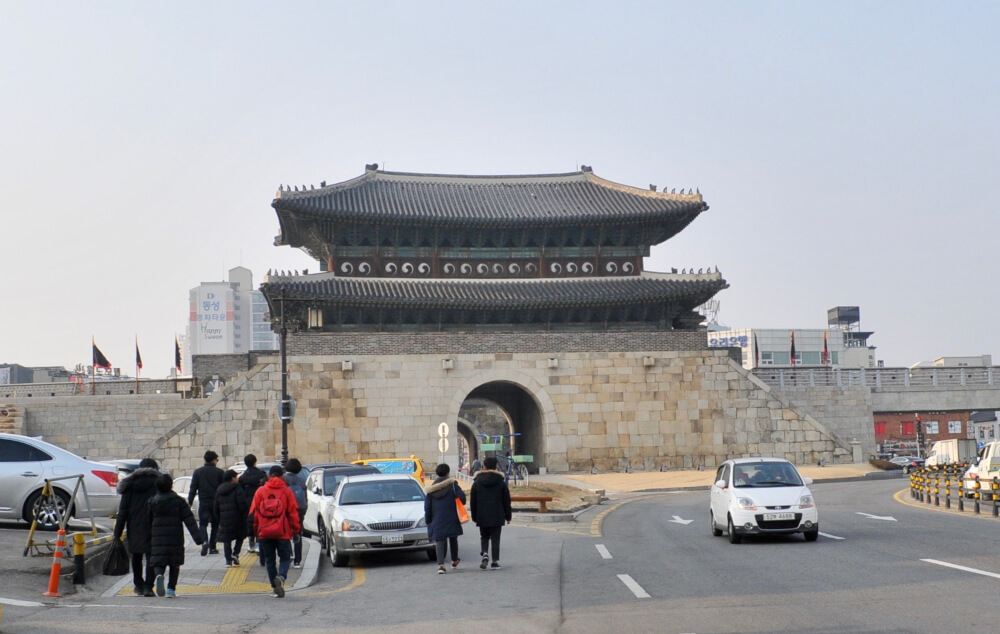


The location of the fortress although a strategic choice also fulfills the baesanimsu with a mountain in the back and a river in the front. It has been designated as a UNESCO world heritage site because according to UNESCO, “It is an outstanding example of early modern military architecture.” It’s pretty fun to think of how many UNESCO sites Eun and I have visited here in South Korea.
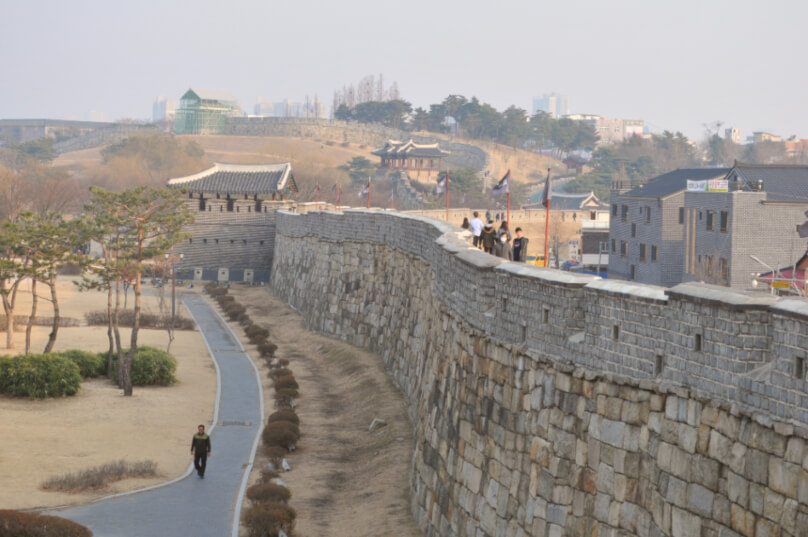
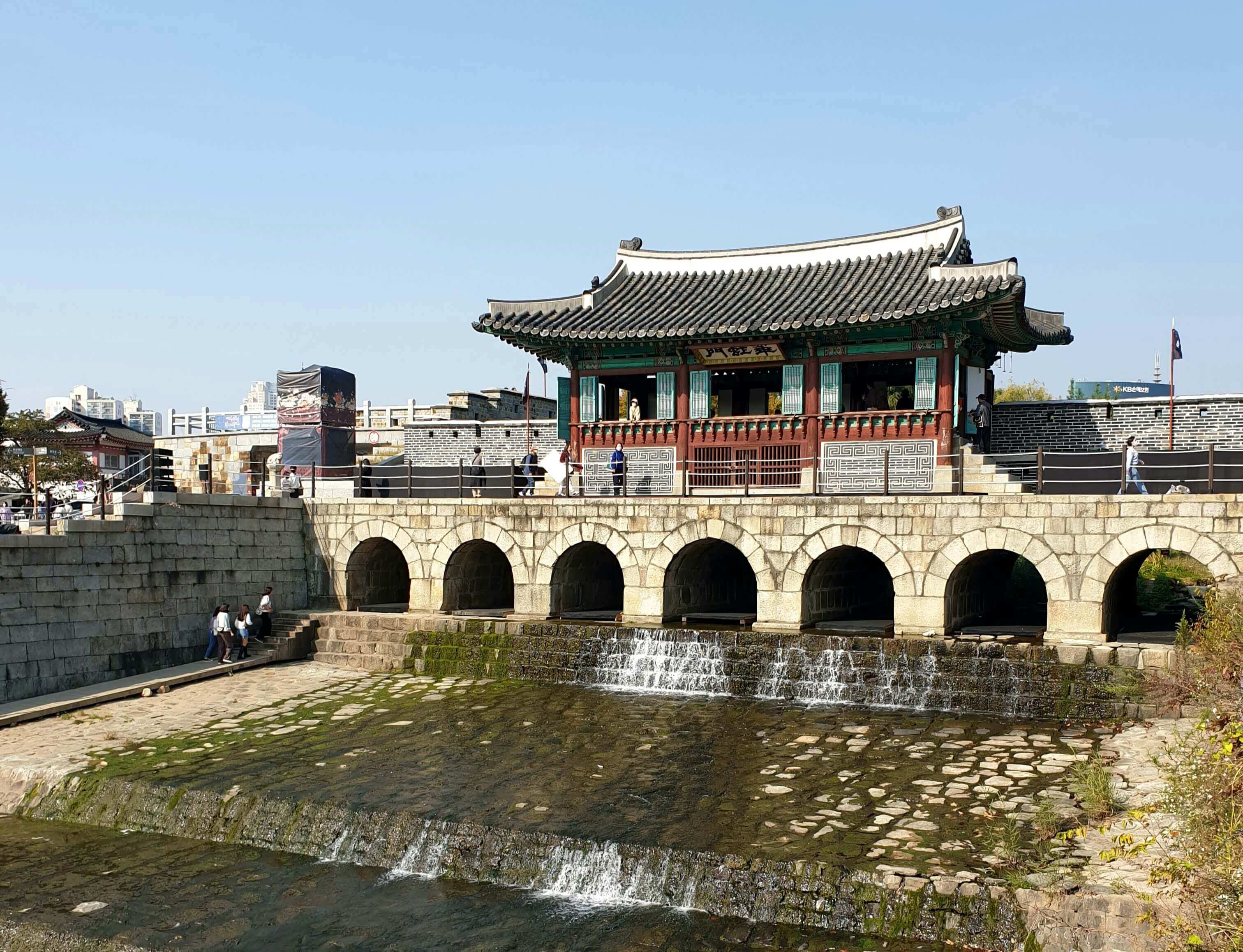
It has many defensive features and was almost impenetrable except for the part facing the river. Due to this possible exposure to enemies the King had watergates with iron bars built along the parts of the wall that cross the river. What you can see today are canons, and towers with windows where soldiers could shoot arrows, along with beacon towers that would have been lit to warn about a coming enemy.


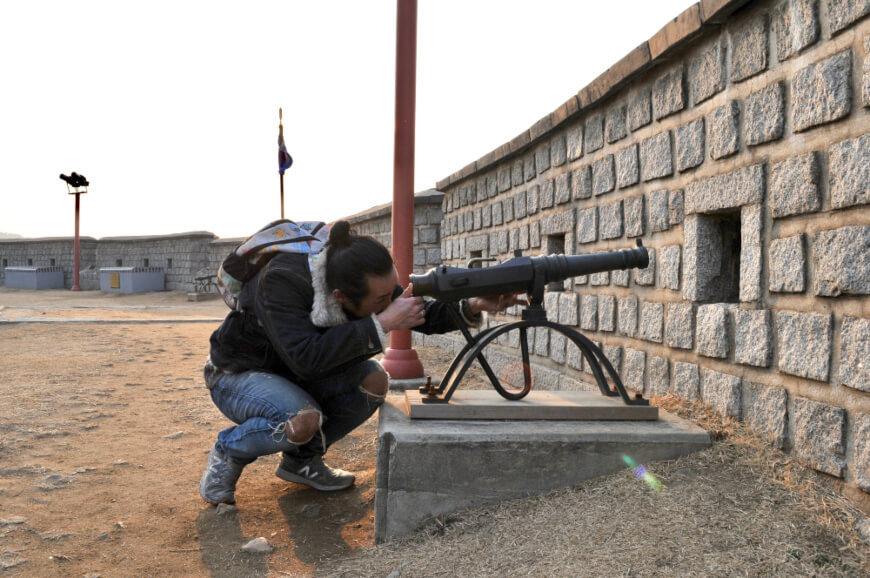
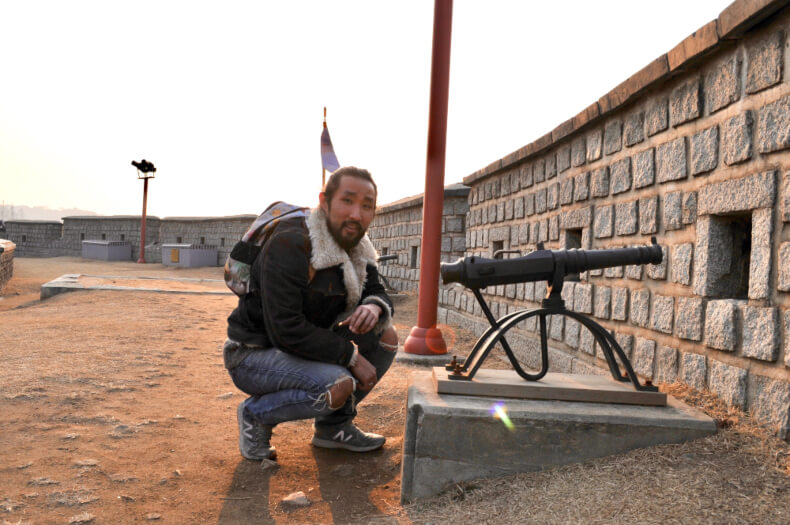
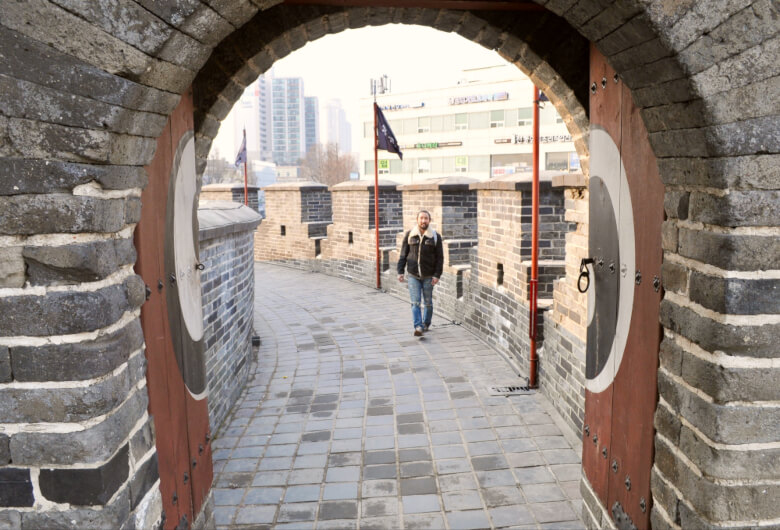


It took three years to build Hwaseong, and was built with the latest technology of the times, and it incorporated eastern and western architectural design elements. Two other aspects that make it unique and a part of UNESCO’s heritage list is its military and commercial functions along with it being built over mountains and a river. It influenced Korean architecture for years to come. It never did become the new capital though, because soon after it was completed the King died. If you are interested in architecture, in particular military architecture, I recommend starting with this wikipedia page and continuing on from there. The page gives a lot of detail on all parts of the fortress. It was built to withstand war and invaders, but of course King Jeongjo and those who designed it had no idea of the violence, weaponry, and destruction that would come from the 20th century wars.
A Devastating History
During the Korean War up to 60% of the fortress had been damaged. It was reconstructed in the 1970’s using the “Records of Hwaseong Fortress Construction” that were written in 1801 not long after the king had died. It is not visible to the untrained eye as to what parts had been rebuilt and which are authentic. Having learned about this destruction while visiting the Hwaseong Fortress, reminded me of visiting parts of Germany and Poland. Cities like Nuremberg and Warsaw, that were 85% to 95% destroyed yet recreated to such historical accuracy that one would never know that bombs had been dropped on the streets where you stood. Suwon, like Seoul had been taken by the North Korean army very early into the war. What many people outside of Korea don’t know is that 5 million people lost their lives, more than half of whom were civilians. Much of the fighting was around Suwon which is only 45 kilometers away from the capital where the first invasion took place. Yet, today, walking the battlements of this ancient wall that was built over 200 years ago, and is still standing after multiple Japanese invasions; destruction during Japanese colonization; attacks during WWII; and then lastly the Korean War, if you didn’t know the history, you would never know what had happened here. You cannot tell that these walls had ever fallen nor that in 2006 an arsonist tried to burn one of the towers down.


We only Saw Half of the Fortress
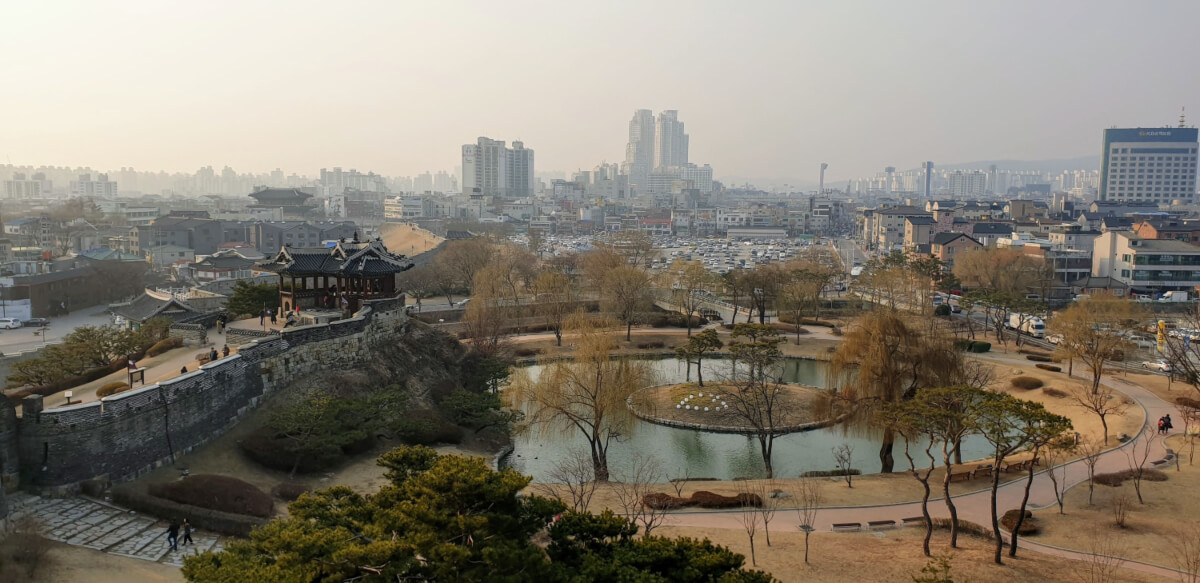
I know that we didn’t walk the nearly 4 miles around the fortress, but we spent about four hours out there that day. I did much of my research after the visit which is too bad since knowing a history of a place while visiting makes it all the more interesting. We started our exploration at Janganmun Gate which is the north gate of the city. Unfortunately, the air was not that good on the day we visited. The pollution levels were a bit high and the photos have that reflective glare that one gets when the sunlight is filtered through smog.
At the time of our visit Janganmun Gate was under some reconstruction, so we were not able to see the interior of the gate, but we were able to go inside the pavillon on the top of the gate where the gaurds would have rested in between sentry duty. From the north gate we headed toward the east.
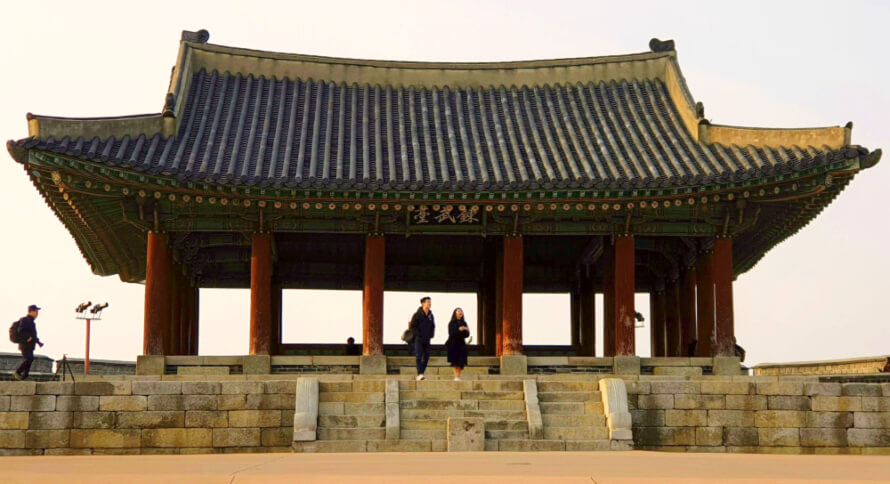
We walked half-way around the wall, mainly sticking to the wall itself and not going into the interior parts of the city. We will have to make another trip out to explore more extensively; especially now, knowing more about the fortress and its history.

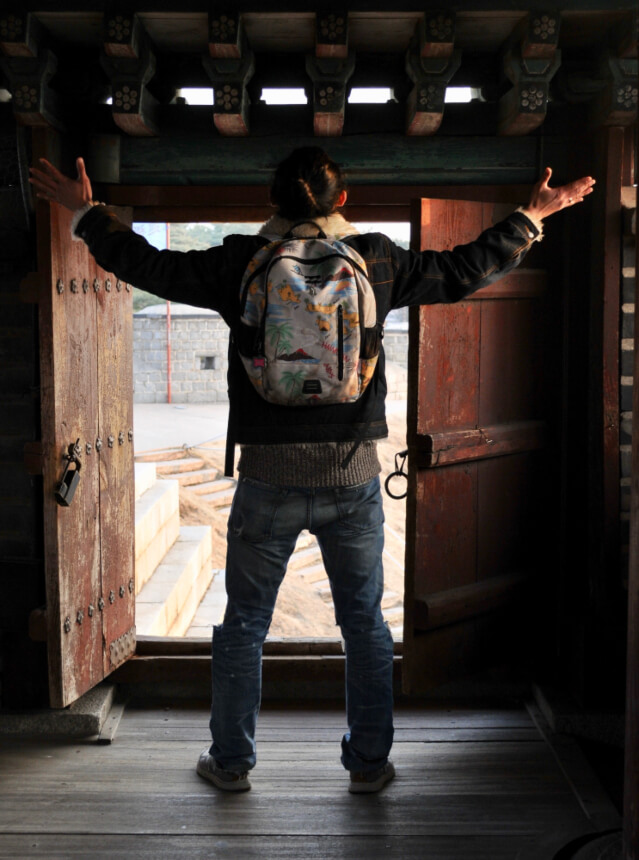


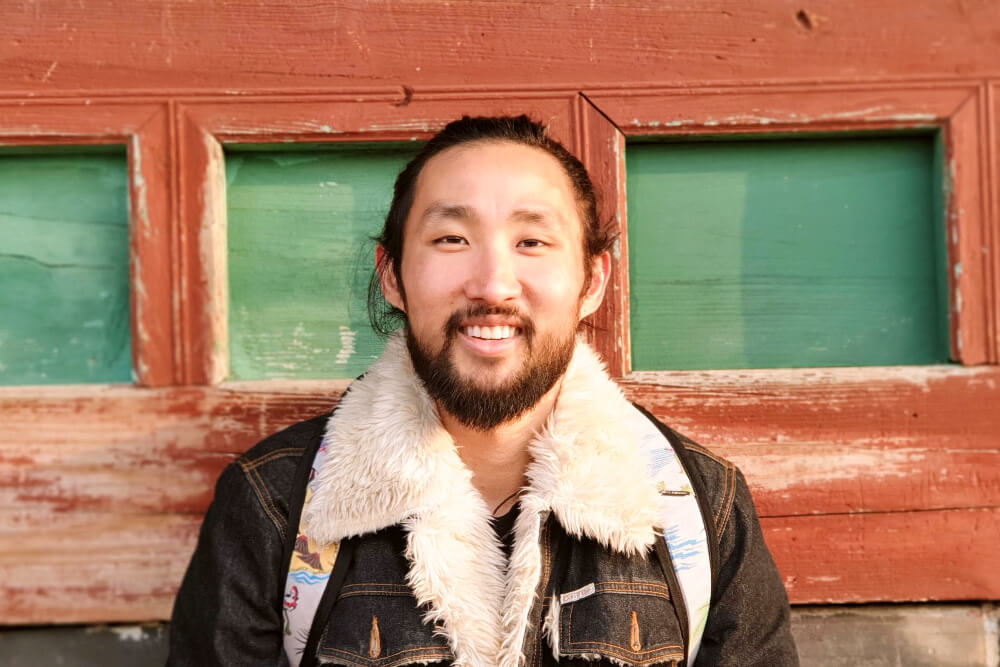
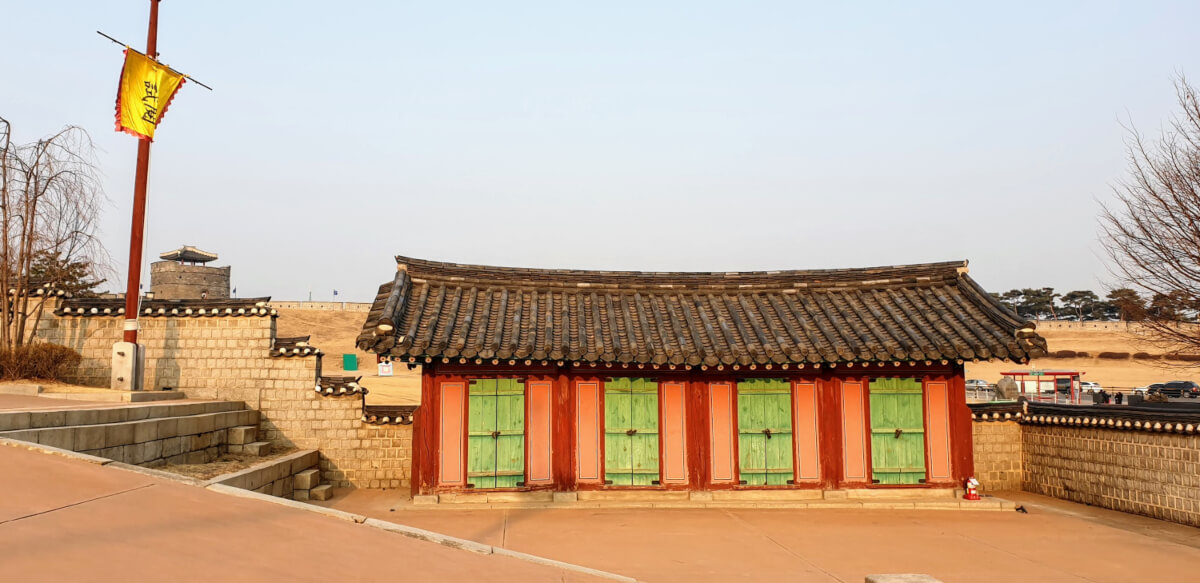


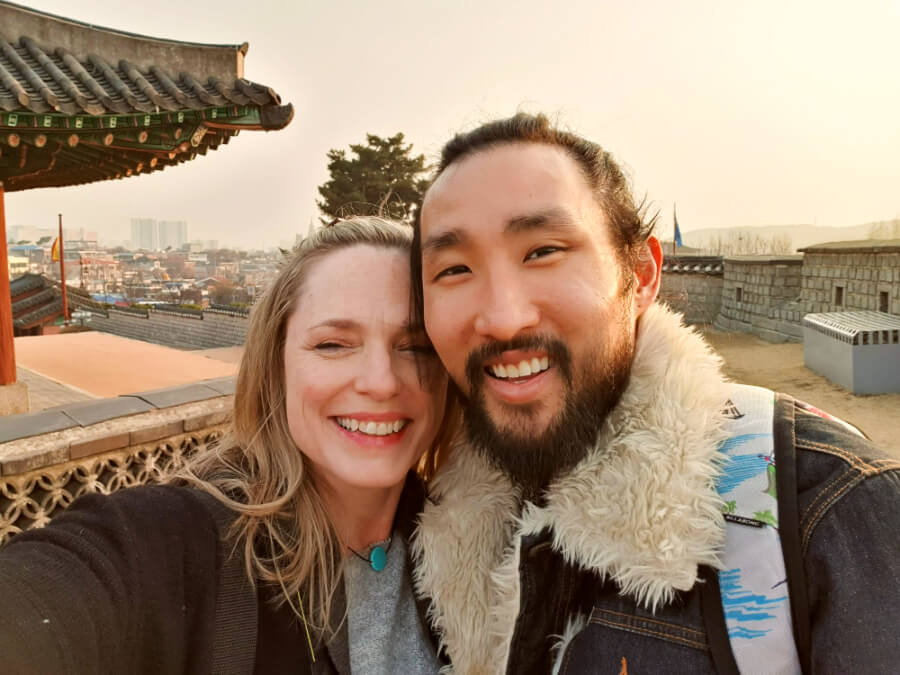

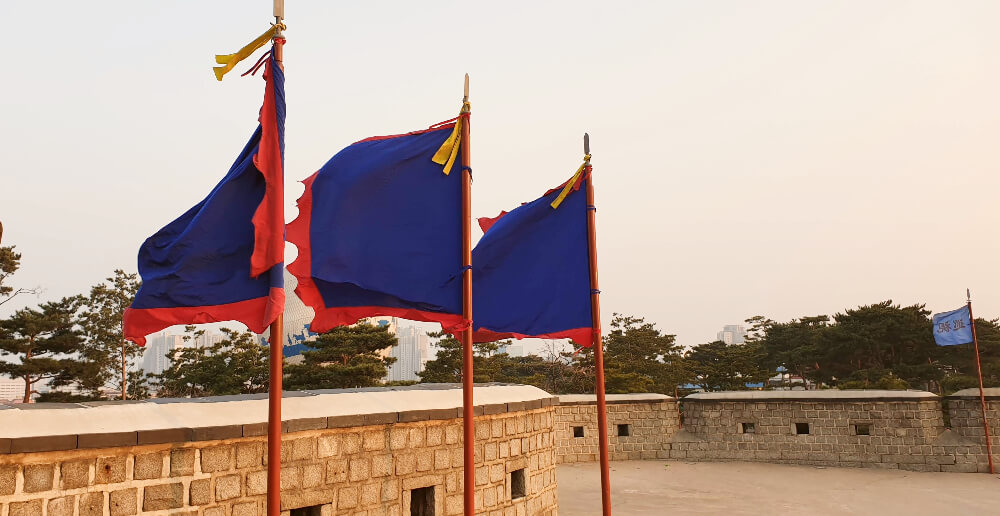
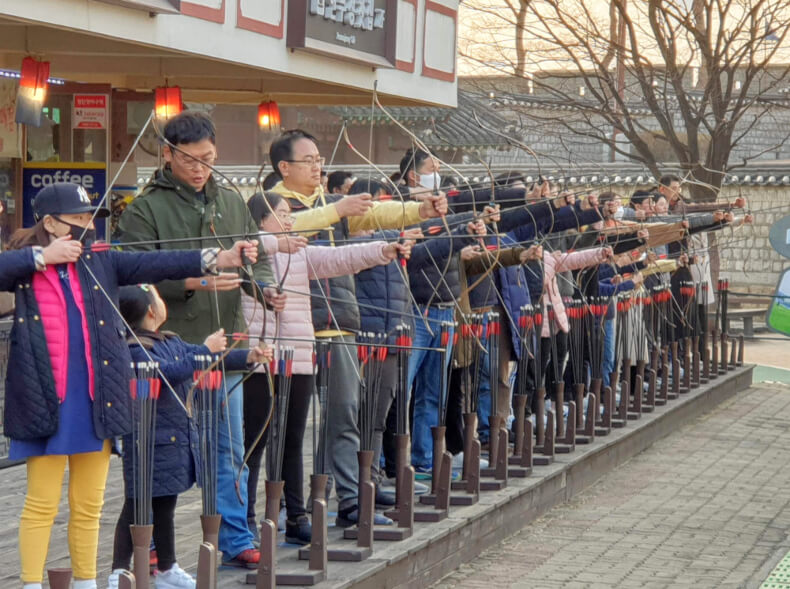
We made it a little past the east gate also called Changnyongmun, (also called Dongmun) before we started to get hungry and also before it got too dark. Our visit to the fortress was in the late fall and night began early. On the way we passed an archery field called Dongbuknodae where soldiers were intended to practice their archery. Today, for 2,000 won (about $1.75) you can try to shoot an arrow and step into the ghostly shoes of Joseon soldiers.

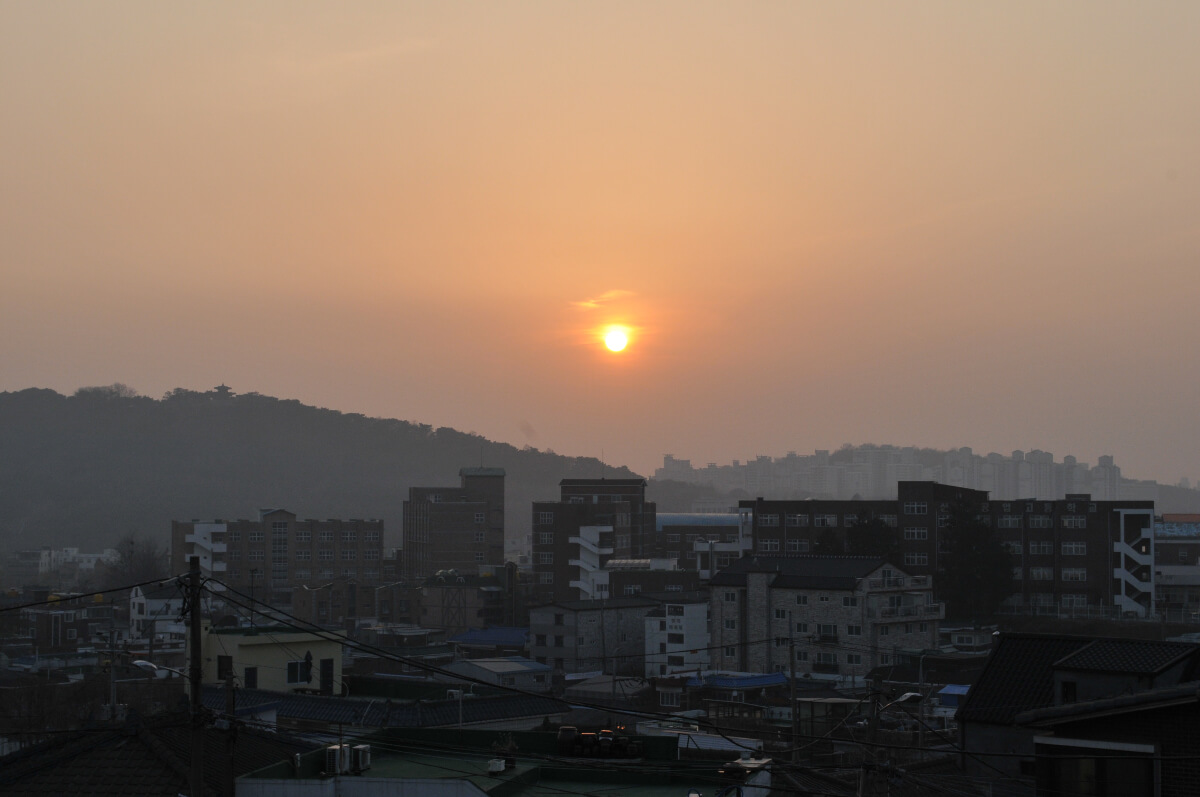
We reached the east gate and wandered along this portion of the wall and explored towers and crossbow platforms. We rested in a pavilion called Dongilporu, and watched the sun set behind the mountain.

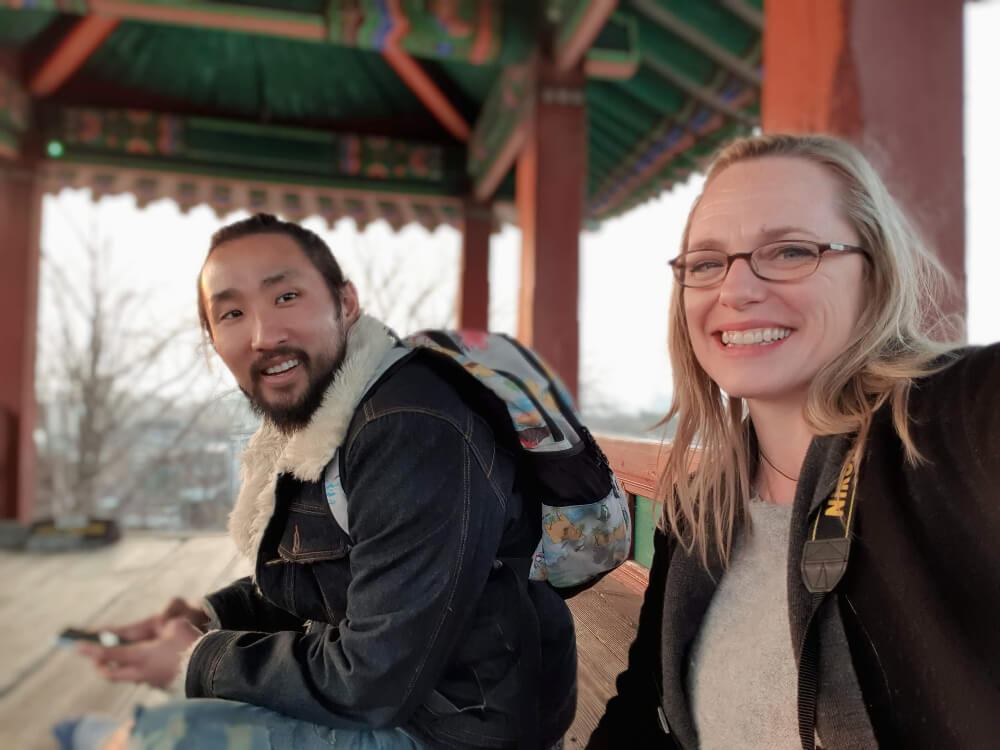

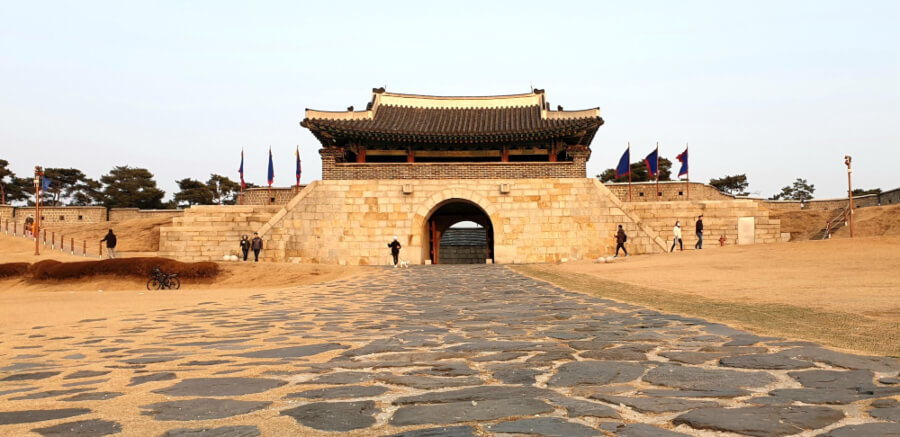
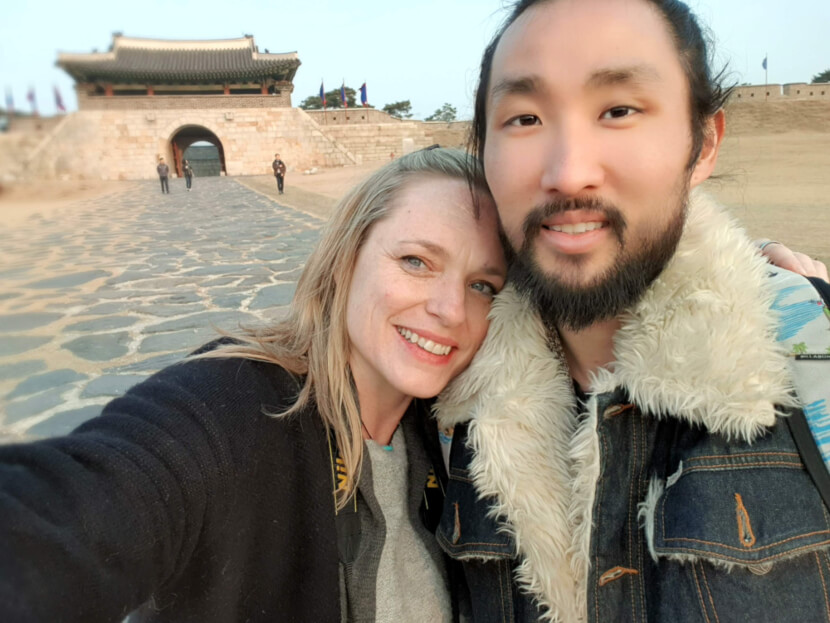
As soon as the sun dropped out of view the air quickly dipped from comfortable to chilly, and we decided to end our exploration due to the chill, the dark, and we were both hungry. We headed back toward the North gate and cut away from the wall. We were not certain as to which side of the wall were were on at one point, but we allowed our noses to guide us toward food. What we could smell was fried chicken. Which made sense since Suwon has a street called Chicken Street that is famous for fried chicken.

By way of back roads we walked past dilapidated homes and empty lots. We wandered through small markets and then found our way back toward the wall. Using GPS we found our way to Chicken Street which was also part of this trip’s visit. I wrote a post on chicken street here.

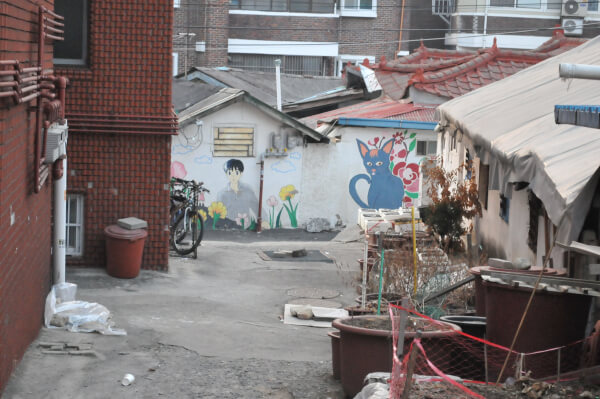


We saw less than half of the fortress. If you want to see everything in a day you’ll need to come early as there is much to see. Along with the many features on the wall itself there are also the places within the walled city, including the tomb of Prince Sado, the palaces, and the shrines. It is our intention to return, and of course if you make your way out to the Fortress you must also visit Chicken Street for some excellent fried chicken.
If you are looking for day trips to take outside of Seoul this is a good one. Depending on where you are staying it is 45 minutes to an hour subway/bus ride outside of Seoul. Seoul is a fun city to visit and travel to, but if you make it as far as South Korea, it is in your best interest to see what is also offered outside of Seoul.
Till next time.
Accidental Vagabond
Help keep this Blog Going. If you enjoy the content please donate. All donations go to keeping the blog up and running.
Choose an amount
Or enter a custom amount
Your contribution is incredibly appreciated.
Donate An Accidental Vagabond